Cabe’s Collection – Author Cabe Eaton revisits Leonard Cohen’s ‘Songs of Love and Hate’
Cabe Eaton is an Austin-based music fanatic and author of the new book, ‘How Did This Sh*t Become a Number 1 Hit?: From WTF to #1 – 50 Bizarre Hits That Took Over the Charts and the Reasons Why.’ You can purchase his book from online booksellers, such as Strand Books. Cabe is digging into his extensive collection of recordings for 360°Sound and taking a fresh, track-by-track look at some classics.
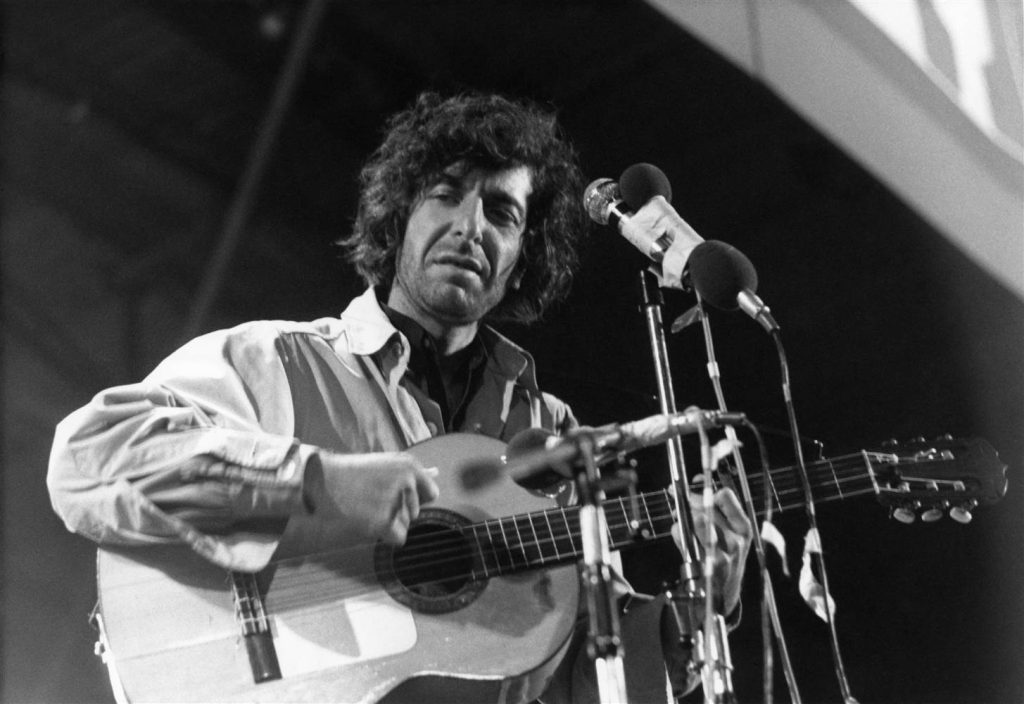
Songs of Love and Hate was released in 1971, at a time when Leonard Cohen was going through a rough patch in his personal life. Cohen’s third release in his career-spanning relationship with Columbia Records, showcases a fascinating exercise in emotional catharsis. While a slight departure from Cohen’s first two long-players, Songs Of Leonard Cohen (1967) and Songs from a Room (1969), Songs of Love and Hate is one of the most stunning nuggets in the artist’s discography.
The Quebec-born Cohen was a steadfast admirer of country music. The September 1970 sessions for Songs of Love and Hate took place in Columbia’s Nashville studios, under the watchful eye of Bob Dylan/Johnny Cash producer Bob Johnston. It would be Cohen’s second consecutive LP recorded in Music City by Johnston, who would play piano on the tracks with the rest of the studio band, made up of a crack team whom Cohen refered to as “The Army.” The ensemble included guitarist Ron Cornelius, guitarist/bassist Bubba Fowler, future chart-topping fiddler Charlie Daniels, and backing singers Corlynn Hanney and Susan Mussman.
But no honky tonks or rodeos are found anywhere in the grooves of Songs of Love and Hate. Arranger/conductor Paul Buckmaster was commissioned to add strings and horns to the master tapes in London. Buckmaster was a man in demand by 1971, having done the orchestral arrangements on David Bowie’s “Space Oddity” (1969), the Rolling Stones’ Sticky Fingers tracks, “Moonlight Mile” and “Sway” (1971), and both of Elton John’s 1970 LPs, Elton John and Tumbleweed Connection.
These eight songs are indignant, graphic, sentimental, suicidal, deceiving, and often downright weird. Cohen foreshadows the themes in this song cycle on the back of the album cover: “They locked up a man who wanted to rule the world – the fools, they locked up the wrong man.”
“Avalanche”
Cohen’s aggressive finger-picking (which he called his “chop”) kicks off the lead track, “Avalanche,” a glum composition about a hunchbacked man on the attack after being exploited and shunned by society. Buckmaster’s foreboding strings set the mood for the artist’s raw vocal, which bellows out vengeful lyrics like, “You strike my side by accident as you go down for your gold” and “The crumbs of love that you offer me, they’re the crumbs I’ve left behind.” Cohen’s sustained picking between verses intensifies as the song progresses, like an avalanche of emotions unraveling before of our very ears.
“Last Year’s Man”
“Last Year’s Man” could be one of the most depressing songs composed about writer’s block: “The rain falls down on last year’s man / That’s a Jew’s harp on the table, that’s a crayon in his hand.” And later, “And all the rain falls down, amen, on the works of last year’s man.” Despite the light string accompaniment and backing vocals – including a children’s choir from The Corona Academy in London added during Buckmaster’s sessions – Cohen demonstrates he can sell a song with just guitar and vocal. The song is enveloped in biblical connotations and includes a nod to Joan of Arc.
“Dress Rehearsal Rag”
A tune that can definitely be notched in the “hate” column, “Dress Rehearsal Rag,” is delightfully evil. In this case, the protagonist is an actor egging himself on in taking his own life. “Now if you can manage to get your trembling fingers to behave / Why don’t you try unwrapping a stainless steel blade?” As Cohen’s strumming builds, Buckmaster’s strings and horns sway in and out like an ocean tide. And just when the blood is about to spill, we learn “And the cameras pan / The stand-in stunt man.” After all, it is just a dress rehearsal.
“Diamonds in the Mine”
For some reason, critics tend to stear clear of “Diamonds in the Mine.” Even die-hard Cohen fans hardly consider it even a guilty pleasure (1977’s “Don’t Go Home With Your Hard-On” usually gets that honor). Still, it’s surely one of his most remarkable recordings. The Army is fully deployed on the track, with a steel guitar ringing and an uncredited drummer hopping behind a trap set. Cohen absolutely growls the apocalyptic lyrics like a madman. Even Charles Manson seemingly gets a shout-out: “And the only man of energy, yes, the revolution’s pride / He trained a hundred women just to kill an unborn child.” After the singer’s disturbing voice evolves into a blood-curdling scream during the final moments of the song, he drops the mic, declaring, “That’s all I’ve got to say.”
“Love Calls You by Your Name”
Cohen finally unleashes his first bona fide love song in this cycle with “Love Calls You By Your Name.” This is not your run-of-the-mill, lovey-dovey ditty; it even has a few resentful themes weaved into the lyrics. Supported by Buckmaster’s score, Cohen takes us on a picturesque roller-coaster ride involving oceans, snowmen, and peanuts before bringing home each verse with “Once again, once again love calls you by your name.”
“Famous Blue Raincoat”
“Famous Blue Raincoat” is one of Cohen’s most-beloved classics. The droning melody in the verse sections, backed by the angelic vocals of Hanney and Mussman, ushers the listener into darkness. Cohen wistfully plucks his guitar strings while he sings, “And what can I tell you, my brother, my killer?” The song’s hook lies in its chorus, comprised of a melody that would subsequently be borrowed by other writers, for songs like Leo Sayer’s 1977 chart-topper “When I Need You,” and Elton John’s 1980 Top-5 hit “Little Jeannie.” Much like “Dress Rehearsal Rag,” Cohen slips in a surprise ending – this time it’s in the form of the concluding line, “Sincerely, L. Cohen,” making it clear we’ve been snooping into a letter the whole time.
“Sing Another Song, Boys”
Recorded at the Isle of Wight Festival in England, “Sing Another Song, Boys,” has a similar feel as an earlier Cohen song, “So Long, Marianne,” with its 6/8 sway. Accompanied on stage by The Army, Cohen announces at the opening of the track, “Let’s sing another song, boys / This one has grown old and bitter,” before going into a bizarre tale of a moneylender’s daughter who tempts men with clarinets and Nazi daggers. I must say that the incessant “la-da-la-la” ending can easily cause a migraine. This version later appeared on Cohen’s 2009 disc, Live At The Isle Of Wight 1970.
“Joan of Arc”
“Joan of Arc” elegantly brings Songs of Love and Hate to a close with its pleasant chord progression and laid-back brass embellishments. (Hanney and Mussman’s recurring “la-da-las” are even tolerable.) The delay effect used on Cohen’s vocal is as unique as the song’s themes, which describe a conversation between the narrator and the 15th-century Maid of Orléans. But what appears to be talk of a wedding procession turns out to be Joan’s body perishing while burning at the stake. It looks like our frustrated writer from “Last Year’s Man” just got his mojo back.
Spotify users can listen to the entire album here: