Cabe’s Collection – Mose Allison’s ‘Mose Alive!’
Cabe Eaton is an Austin-based music fanatic and author of the new book, ‘How Did This Sh*t Become a Number 1 Hit?: From WTF to #1 – 50 Bizarre Hits That Took Over the Charts and the Reasons Why.’ You can purchase his book from online booksellers, such as Strand Books. Cabe is digging into his extensive collection of recordings for 360°Sound and taking a fresh, track-by-track look at some classics.
There can be no bigger endorsement for jazz pianist/vocalist Mose Allison and his blistering 1965 live set Mose Alive! than KISS’s similarly-titled, 1975 LP Alive! With their groundbreaking concert collection, the makeup-clad KISS would pay tribute to Allison’s rollicking appearances from ten years prior at the Lighthouse Café in Southern California, where the whiskey was flowing and panties were being tossed onto the piano like roses. KISS’s pyrotechnics couldn’t hold a candle to the ones ignited by Allison’s crew.
The above words, of course, are total crapola. Gene Simmons and Paul Stanley probably never heard of Mose Allison. In fact, most jazz listeners might not even be aware of the mostly-forgotten Mose Alive! And that’s why KISS can be forgiven for nicking its title. No debauchery was involved in the making of Mose Alive!, which was recorded during a nine-day stretch in October 1965 at the aforementioned Lighthouse Café, but the album indeed exemplifies what was so special about Allison.

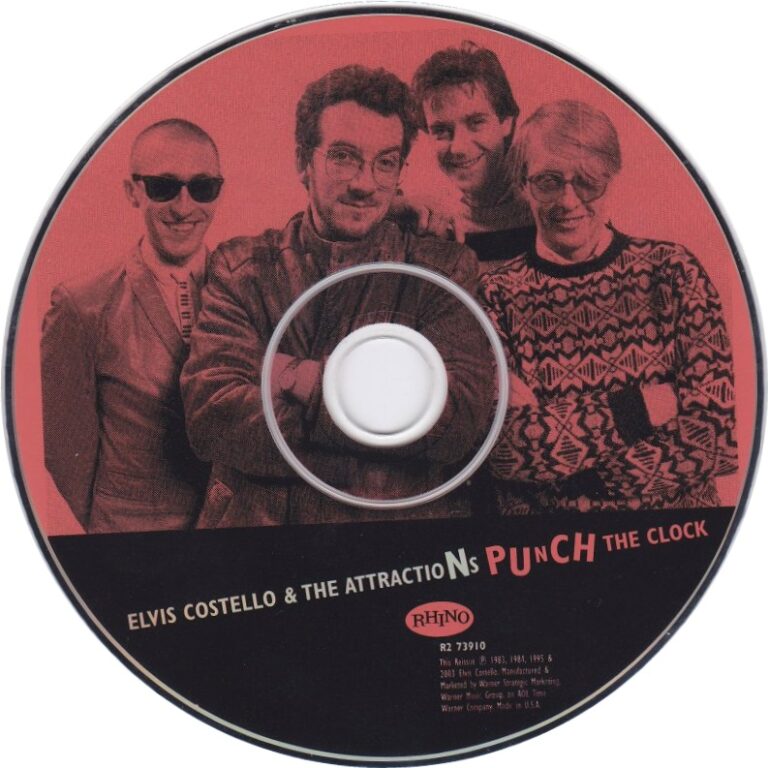
Mose Allison hailed from Tupelo, MS, with an admiration for Delta blues music and jazz. He took up piano at an early age and performed in numerous ensembles throughout the ‘40s, whether it be at his alma mater, Ole Miss, or while enlisted in the Army. But Allison’s bluesy, nonchalant vocals were what piqued the interest of listeners and record labels upon his relocation to New York City during the ‘50s. Allison’s musical legacy would later cross musical boundaries, with both Bonnie Raitt and Elvis Costello covering the artist’s “Everybody’s Cryin’ Mercy,” while The Who would tackle “Young Man’s Blues” (which had initially inspired “My Generation”) for their 1970 Live at Leeds album.
Mose Alive! is the perfect introduction to the genius of Mose Allison, as the intimate nature of the live gigs is truly captivating. Allison brings together Stan Gilbert on bass and Mel Lee on drums for these Lighthouse dates, setting the stage for a memorable performance that, at times, surprises the snooty crowd who might be expecting drab run-throughs of “Misty” or “Autumn Leaves.” No sir, Mose Allison is going to be as bad as he wants to be.
“Smashed”
This is one of Allison’s most celebrated originals and it makes its debut right here in front of the Lighthouse crowd. Leon Russell would cover the tune for his 1974 Stop All That Jazz LP, but Allison’s declaration, “It’s gettin’ late and I’m ripped / You know my mind is spinning” and “I’m smashed just like a busted fender” in front of an inanimate audience is priceless. Neither Allison nor his piano has been drinking, although the attendees for that night could be on Quaaludes.
“Seventh Son”
Willie Dixon’s “Seventh Son” had previously appeared on Mose Allison Sings (1957) and Creek Bank (1958). Allison implements an abstract piano introduction before that audience hoots and hollers after recognizing the opening lyric, “Everybody’s talkin’ ‘bout the seventh son / To the whole wide world there is only one.” Check out the little “gulps” the singer adds to the choruses. Gilbert and Lee hold down a Latin rhythm as Allison’s extended chords fill out most of his self-accompaniment.
“Fool’s Paradise” / “I Love the Life I Live”
These two selections come from Allison’s 1960 I Love the Life I Live LP. “Fool’s Paradise” was made popular in 1955 by blues balladeer Charles Brown, and Allison matches Brown’s woeful lamenting of “drinking and gambling and staying out all night.” His piano solo uniquely brings together both jazz and honky-tonk elements. “I Love the Life I Live,” another Willie Dixon creation, has a sexy, sultry feel to it. (Even the audible broken glass heard in the background can’t ruin the moment.) Listen for the highly-risqué closing lyric, “Don’t talk about me ‘cause I could be high.”
“Since I Fell for You”
Allison ventures to the pop side of things for “Since I Fell for You,” which was a Top 5 hit for Lenny Welch in 1963. Mose’s gentle delivery doesn’t do much justice for the elongated “Looove” lyric, but he succeeds in giving the tune a bluesy interpretation by grunting along with his piano notes in between vocals. Allison blasts out a particularly fiery solo amid Lee’s light brush playing.
“Love for Sale”
Allison had first tackled this Cole Porter standard on 1960’s Transfiguration of Hiram Brown. And he plays it live here with the same vim and vigor as on that album. It’s a lightning-speed, instrumental bebop performance that finds Mose shredding the keys and featuring some melodic bass plucking by Gilbert, while Lee applies some fiery solo breaks of his own.
“Baby Please Don’t Go”
Another Hiram Brown cut, “Baby Please Don’t Go” (composed by Big Joe Williams) is comprised of an uppity gait that brings to mind Ray Charles’s “What’d I Say.” The attendees present on the night this one was put onto tape were especially riled up. Allison slyly recites William’s blues-soaked lyrics while his piano riffs transcend standard blues changes, sounding as if they came from Mars. [Editor’s note: This has been a popular cover for rockers from Ted Nugent to Cowboy Junkies.]
“That’s Alright”
In contrast to the previous selection, Mose’s take on this Jimmy Rogers number is about as standard as the blues can get. However, the pianist mixes his solo up, throwing in some strange eighth-note scales in unison, in order to keep everyone on their toes. Despite his acerbic vocal style, you can still sense the pain when Allison sings, “Still, every now and then / I wonder who’s lovin’ you tonight.”
“Parchman Farm”
This title is in reference to the infamous Mississippi State Penitentiary in Parchman. The artist had loosely adapted his version from the original 1940 recording by former Parchman inmate/bluesman Bukka White. Allison’s composition is built around an ascending chord pattern, which builds up to the zinger at the ending, “Well I’m gonna be here for the rest of my life / And all I did was shoot my wife.” It’s a lyric that draws a roaring laugh from the slightly-sadistic crowd. Allison plays an avant-garde piano backing throughout the piece while mimicking what sounds like a popcorn popper, via some “uh-uh-uhs” blurted over the rhythm.
“Tell Me Somethin’”
Mose had reportedly composed “Tell Me Somethin’” in haste for the Lighthouse shows. But the song would endure within the artist’s career as part of his 1971 Western Man LP and would later be used as the title of his 1996 tribute album. Here, a slow and steady strut, as supported by Gilbert’s creeping bass line, moves things along. Allison’s forceful piano solo is almost as impressive as his lyrical response to complaints of the world being a mess, “Well, tell me something new.”
“The Chaser”
Last but not least is the “The Chaser,” which is more or less a seven-minute showboating exhibition by the three musicians. It’s an instrumental, featuring the same spirited vibe as that of “Love for Sale.” All three men trade solos until the 4:34 mark, at which point the artist introduces the band before rejoining the combo for some more incendiary playing. Right at six minutes, Allison breaks off for an unaccompanied solo, involving more abstract fingering, as if he were saying, “You know you love this crazy ruckus I’m unleashing onto your ears, don’t you?”
Your move, KISS.